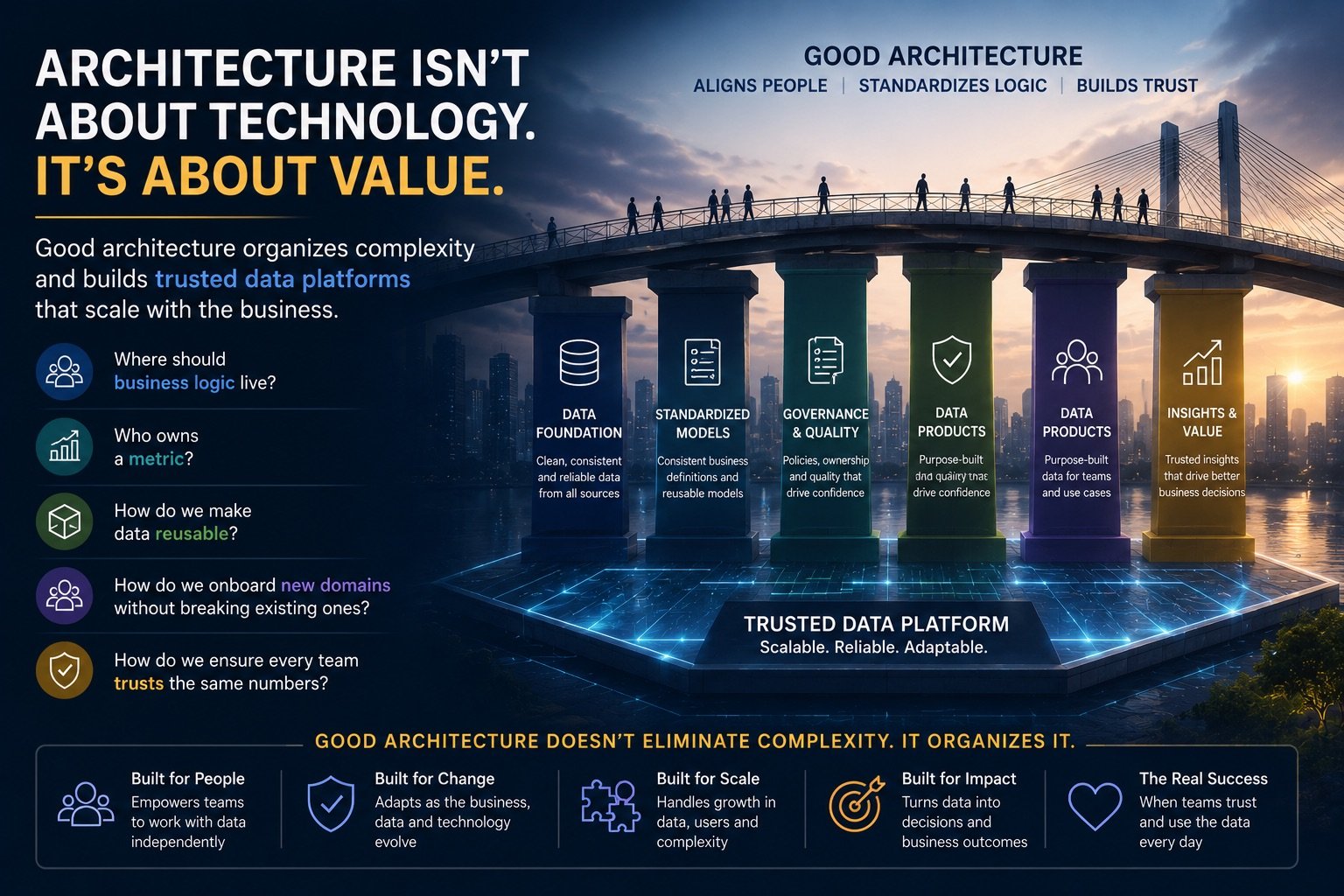
One misconception I had early in my career: data architecture is about choosing the right technology. Today, I see it differently. Technology is often the easiest decision.
The real architectural questions
The harder — and more valuable — questions are the ones that don't show up in a tool comparison spreadsheet:
- Where should business logic live?
- Who owns a metric?
- How do we make data reusable?
- How do we onboard new domains without rewriting existing pipelines?
- How do we ensure every team trusts the same numbers?
These questions shape platforms that can scale with an organization. A tool choice rarely does.
What actually delivers long-term value
In recent projects, I found that reusable transformation frameworks, standardized business definitions, and strong data quality practices delivered far more long-term value than simply introducing a new tool.
DATA FOUNDATION
→
STANDARDIZED MODELS
→
GOVERNANCE & QUALITY
→
TRUST & ADOPTION
Good architecture doesn't eliminate complexity. It organizes it.
The compliment that actually matters
The best compliment for a data platform isn't "that's a great architecture." It's:
"Our teams can finally trust and use the data."
That's when architecture has done its job.